
Facet joint syndrome is one of the more overlooked causes of chronic back and neck pain – yet it accounts for a significant proportion of persistent spinal discomfort in adults. The facet joints are the small paired joints running along the back of the spine. When they degenerate or become inflamed, they produce a distinctive pattern of deep aching, stiffness, and referred pain that often doesn’t respond well to standard pain management.
Understanding facet joint syndrome treatment – including where stem cell therapy fits in – can help patients with persistent spinal pain make more informed decisions about their care.
What Are Facet Joints and What Is Facet Syndrome?
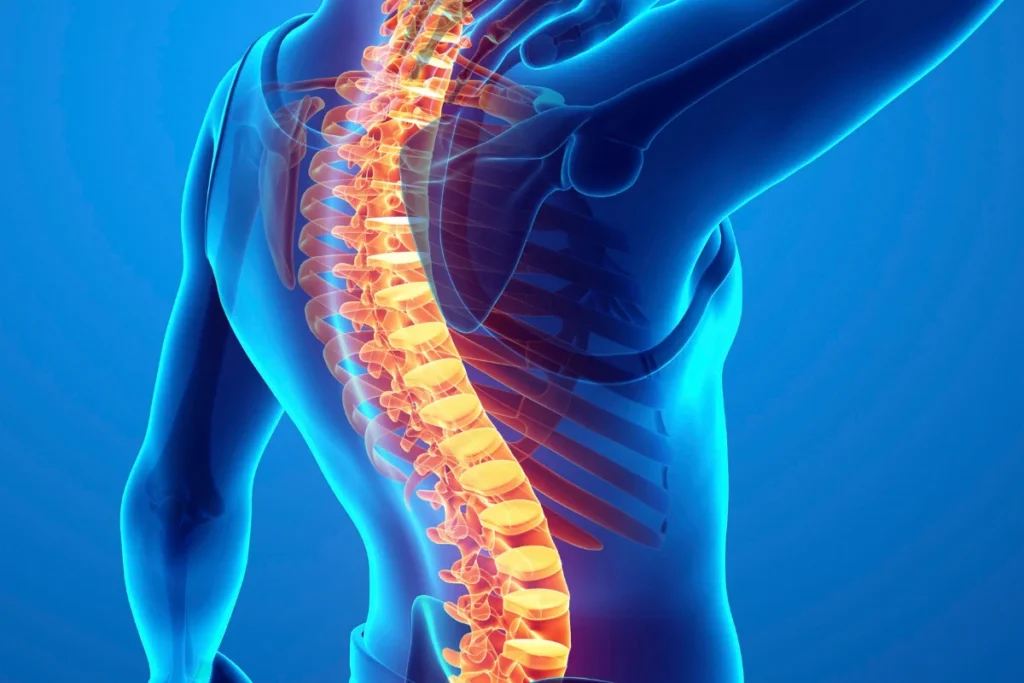
The spine is made up of vertebrae stacked on top of each other. Between each pair of adjacent vertebrae, there are two facet joints – one on each side at the back of the spine. These joints guide and limit the spine’s movement, providing stability while allowing bending, twisting, and extension.
Like all joints, facet joints are lined with cartilage and surrounded by a joint capsule containing fluid. When the cartilage wears down through osteoarthritis, overuse, or injury – or when the joint capsule becomes inflamed – the result is facet syndrome.
This can occur anywhere along the spine. Cervical facet syndrome involves the neck joints (C2-C7), producing neck stiffness and referred pain to the head, shoulders, and upper back. Thoracic facet syndrome affects the mid-back and is less common. Lumbar facet syndrome is the most prevalent, causing lower back pain with radiation to the buttocks and upper thighs.
Symptoms of Facet Syndrome
Facet syndrome produces a recognizable pattern of symptoms, though it can overlap with disc-related pain and other spinal conditions:
- Deep, aching back or neck pain that is typically worse with extension (bending backward) or rotation
- Morning stiffness that eases after moving for a few minutes
- Referred pain that radiates into the buttocks, thighs, or shoulders without a clear nerve compression pattern (not true sciatica)
- Tenderness directly over the affected joint on palpation
- Pain that worsens with prolonged standing or sitting, particularly in positions that compress the facet joints
- Relief with flexion – bending forward often reduces facet-mediated pain because it opens the joint space
Cervical facet syndrome treatment needs to account for the additional symptom of headaches originating from the upper cervical joints (particularly C2-C3), which can refer pain into the base of the skull and behind the eye.
Diagnosing Facet Syndrome
Diagnosis involves a combination of clinical history, physical examination findings, and imaging. MRI or CT scanning can reveal facet joint degeneration, arthritic changes, and joint effusion. However, imaging findings must be correlated with symptoms – many people show facet degeneration on imaging without significant pain, while others have severe symptoms with relatively subtle imaging changes.
Diagnostic medial branch nerve blocks – injecting local anesthetic next to the nerves that supply the facet joints – are often used to confirm that the facet joints are the actual pain source.
Facet Joint Syndrome Treatment: Conventional Options
Physical therapy forms the foundation of long-term management. A program focused on spinal stabilization, core strengthening, and improving flexibility reduces the load placed on facet joints during daily movement. Manual therapy and targeted mobilization can also help improve joint mobility and reduce pain.
Activity and posture modification – particularly avoiding prolonged extension loading positions – reduces mechanical stress on the affected joints.
NSAIDs and pain medications provide symptomatic relief but do not address the underlying joint degeneration.
Medial branch nerve blocks using corticosteroids can temporarily reduce inflammation within the facet joint capsule, providing meaningful pain relief for weeks to months.
Radiofrequency ablation (RFA) – a procedure that uses heat energy delivered via a needle to interrupt the nerve signals from the facet joint – can provide longer-lasting pain relief (typically 6 to 18 months) when nerve blocks confirm facet origin.
Stem Cell Therapy for Facet Syndrome
For patients seeking an approach that addresses the underlying joint degeneration rather than simply interrupting pain signals, regenerative medicine offers a meaningful alternative conversation.
Stem cell therapy using mesenchymal stem cells (MSCs) has been studied in the context of spinal arthritis and facet joint pathology. The hypothesis is that MSCs may help reduce chronic inflammation within the joint capsule and support the health of cartilage and surrounding connective tissue. These cells are thought to work primarily through paracrine effects – releasing anti-inflammatory and regenerative signaling molecules into the joint environment.
For facet syndrome, stem cell therapy may be relevant in several ways:
- Reducing the chronic inflammatory state within degenerated facet joints
- Potentially slowing the progression of cartilage loss within the joint
- Supporting the connective tissue structures around the joint
Unlike radiofrequency ablation – which interrupts pain signals without changing the underlying tissue – regenerative approaches aim to improve the tissue environment itself. This distinction matters for patients who want to address the root biology of their condition rather than simply manage symptoms.
Cervical facet syndrome treatment with regenerative approaches is particularly relevant because the cervical spine is a delicate area where repeated injections carry procedural risk, and patients may be seeking less invasive or less repetitive options.
Stem cell therapy for spinal conditions is an evolving field, and patient selection is important. Best outcomes are typically seen when there is meaningful cartilage and connective tissue remaining in the joint – not in end-stage, severely degenerated joints where structural loss is complete.
FAQ
Evidence supports a multimodal approach: physical therapy and spinal stabilization exercises as the core, combined with temporary pain management when needed. Medial branch blocks and radiofrequency ablation are used for more refractory cases. Stem cell therapy is an emerging option for patients who want to address the underlying joint biology.
Acute facet-mediated pain from a specific incident may resolve within weeks. Chronic facet syndrome related to ongoing degeneration tends to be persistent and requires ongoing management. Well-designed rehabilitation combined with appropriate interventions can produce meaningful, durable improvement.
The general principles are similar, but the anatomy and procedural approach differ. Cervical facet injections and blocks require different technique and carry different considerations than lumbar procedures. Symptoms also differ – cervical facet syndrome commonly produces headaches and arm-referred pain, while lumbar facet syndrome produces lower back and buttock-referred pain.
Research suggests mesenchymal stem cells may help modulate the inflammatory environment within arthritic joints, including facet joints. The evidence base for spinal facet applications is still developing, and outcomes vary. A thorough evaluation is needed to determine whether a patient is an appropriate candidate.
Facet syndrome can cause referred pain that travels into the buttocks and thighs, but true sciatica involves compression of a nerve root – a different mechanism. Distinguishing between these two is important because the treatment pathways differ. Imaging and diagnostic injections can help clarify the diagnosis.
Surgery is rarely needed for facet syndrome alone. It is more commonly considered when there is concomitant spinal instability, severe stenosis, or other structural problems that cannot be managed conservatively. Most patients with facet syndrome manage well with non-surgical approaches.
Key Takeaways
- Facet joints are the small paired joints along the back of the spine; facet syndrome occurs when they degenerate or become inflamed
- Symptoms include deep spinal aching, morning stiffness, referred pain, and pain worsened by extension and rotation
- Facet syndrome treatment includes physical therapy, nerve blocks, and radiofrequency ablation for chronic cases
- Stem cell therapy may help reduce chronic inflammation within facet joints and support connective tissue health as a regenerative alternative
- Cervical facet syndrome treatment follows similar principles to lumbar but requires different procedural approaches and symptom monitoring
- Regenerative options are most relevant for patients with moderate joint degeneration who have not found lasting relief from conventional approaches
Conclusion
Facet syndrome is a common and often underdiagnosed cause of chronic spinal pain. The right treatment plan looks beyond temporary symptom relief toward addressing the underlying joint health – and for many patients, that conversation now includes regenerative options. Ways2Well offers stem cell therapy as part of a comprehensive approach to spinal and joint health. If conventional treatments haven’t resolved your back or neck pain, schedule a consultation to explore whether regenerative care may be appropriate for your situation.
Sources
- Facet Arthropathy: Symptoms & Treatment – Cleveland Clinic
- Facet Arthritis – StatPearls, NCBI Bookshelf
- Lumbar Facet Arthropathy – StatPearls, NCBI Bookshelf
- Facet Joint Syndrome: From Diagnosis to Interventional Management – PMC/NIH
Author: Ways2Well Editorial Team
Reviewed by: Scientific Advisory Board member