
A Lisfranc injury features damage to the Lisfranc joint complex. This crucial part of the foot control balance and facilitates movement. This injury can occur due to some events – direct trauma, excessive stress, or missteps. An improperly treated condition may lead to significant pain and instability. Long-term complications can appear in the long run. For more severe injury cases, surgery has often been the go-to answer. On the other hand, many people would rather not undergo surgery in order to alleviate their discomfort and enhance their standard of living.
Let’s explore different Lisfranc injury non surgical treatment options. A special focus on the promising benefits of stem cell therapy as a treatment alternative will be made.
Lisfranc Injuries – Discovering the Condition
The Lisfranc joint exists in the middle of the foot. It provides a connection between the cuboid bones and the cuneiforms in the midfoot. This joint complex is essential for weight distribution and stability during movement. A Lisfranc injury can appear in the form of a sprain or a complete Lesfranc fracture and dislocation of these bones. Common causes include high-impact trauma – car accidents, sports injuries, or falls. Repetitive stress or overuse can lead to this condition, too.
The following Lisfranc injury symptoms are often reported by patients with this condition.
· Pain in the midfoot while bearing weight
· Swelling and bruising
· Difficulty walking and standing for a long period
· Instability and weakness in the foot
Surgery may seem like the only option for many people to restore full function. However, Lisfranc injury non surgical treatment can offer effective pain relief. It offers functional recovery for mild and moderate Lisfranc joint injuries.
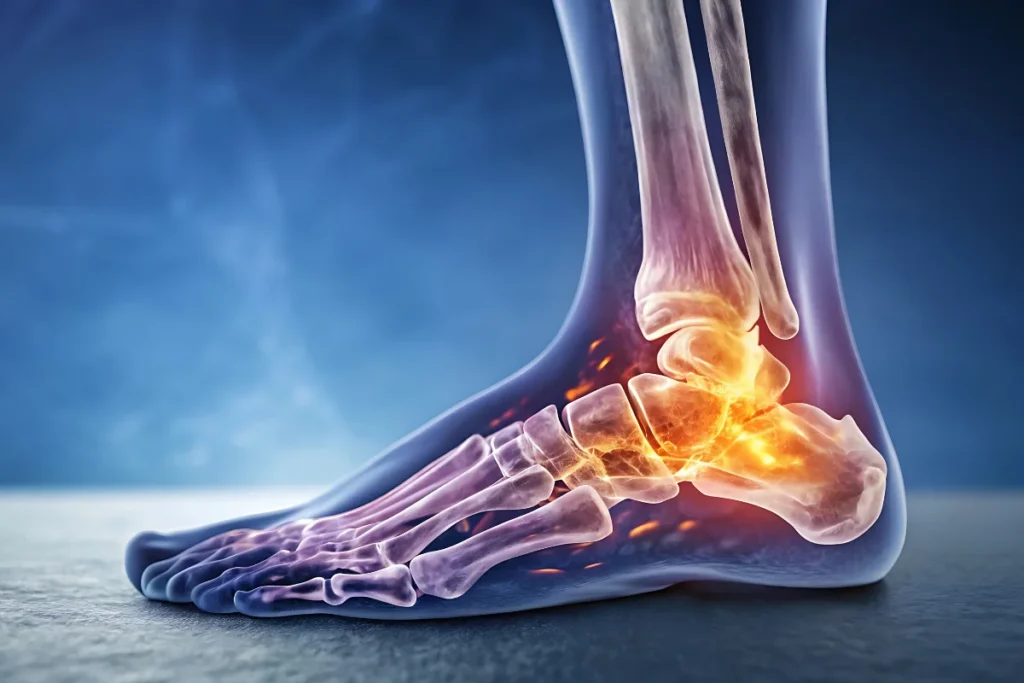
Non-Surgical Treatment Options for Lisfranc Injuries
Alleviation of the pain and reduction of inflammation have become the main goals of these treatments. They promote healing with no need for surgery. Let’s discover the most effective options.
Rest and Immobilization
The first and most crucial step in treating the ailment remains to ensure that the foot has enough time to rest and recuperate. Swelling and pain can be alleviated by putting the affected foot at ease. This Lisfranc injury non surgical treatment helps lower pressure on the affected area. The joint can be secured and more harm prevented with immobilization with a cast, walking boot, or brace. The patient may require a few weeks of restriction to enable proper healing, contingent upon the seriousness of the damage.
Physical Therapy
Physical therapy offers a great way to help the foot get back on its feet once the inflammation and soreness have gone down. Patients work with a rehabilitation professional to increase their flexibility, strength, and a wide variety of motion with a series of exercises. By correcting any muscular imbalances or deficiencies that may have developed as a consequence of the condition, this Lisfranc injury non surgical treatment not only facilitates a speedier recovery but also aids in the prevention of further problems.
Pain Management
One important aspect of non-surgical treatment for Lisfranc injury in patients suffering from persistent pain or discomfort remains the use of pain strategies. Reducing inflammation and handling pain have been common uses for non-steroidal anti-inflammatory medicines (NSAIDs). Injections of corticosteroids may be given to patients with more severe symptoms so that the relief lasts longer. The patient’s capacity to carry out routine tasks during the healing process can be greatly improved with this Lisfranc injury non surgical treatment.
Custom Orthotics
The use of molded insoles and arch supports can improve the foot’s stability and comfort because of the distribution of pressure more uniformly. Patients with persistent foot discomfort from a Lisfranc injury and those with problems with foot alignment may find these devices very helpful. Orthotics can improve mobility and alleviate pressure on the wounded area. The application of this Lisfranc injury non surgical treatment leads to a more comfortable and speedier recovery.
Stem Cell Therapy for Lisfranc Injury Non Surgical Treatment
One innovative and encouraging non-surgical option for Lisfranc injury treatment in recent years has become stem cell therapy. Injuries to soft tissues and cartilage can all be effectively treated with stem cells because of their capacity to repair and regenerate damaged tissues.
How Stem Cell Therapy Works
Stem cell therapy makes use of MSCs – mesenchymal stem cells. They are taken from the patient’s own body – from fat or bone marrow. The next step includes infusing these cells into the wounded location. There, they will promote the body’s own healing mechanisms. Stem cells demonstrate the capacity to fix cartilage and ligaments after a Lisfranc injury. This ensures a more rapid recovery with less discomfort and inflammatory events.
Since stem cells address the injury’s underlying cause, not only the symptoms. They offer an excellent Lisfranc injury non surgical treatment. As a result, patients have lasting pain relief. They can get back to their usual routines in a more expedient manner.
Advantages of Stem Cell Therapy
Promotion of Tissue Regeneration
The remarkable capacity of stem cells to repair injured tissues sets them apart. All connective tissues can benefit from stem cell treatment in the event of a Lisfranc injury. As a result, comparing stem cell treatment with other non-surgical alternatives, healing after application of stem cells may be faster and more efficient.
Reduction of Inflammation
Discomfort and pain in Lisfranc injuries are often caused by inflammation. Because of their anti-inflammatory characteristics, stem cells can alleviate swelling and discomfort with no requirement for the patient to take painkillers for an extended period of time.
Non-Invasive and Low-Risk
A major perk of stem cell treatment is that it doesn’t involve any kind of invasive surgery. Stem cell therapy, in contrast to surgical treatment surgery with lengthy recovery periods, just requires a little injection and can be performed as an outpatient procedure. There is far less room for error, and the healing period is far less than with more conventional surgical methods.
Long-Term Benefits
Stem cell therapy provides long-lasting advantages, unlike standard pain therapies, which may only provide brief relief. Reducing the likelihood of further harm or chronic pain, stem cells’ healing properties target the source of the problem. Many patients find that stem cell therapy, a non-surgical option for Lisfranc injury treatment, leaves them with more mobility and function in their feet than before the accident.
Minimizes the Need for Future Surgeries
Stem cell therapy can lessen the frequency and severity of surgical procedures because of encouraging the body’s own healing processes. The regeneration of damaged tissues can lessen the necessity of further treatments. Stem cell therapy helps many people with Lisfranc injuries stay away from joint replacements and fusion surgeries.
Faster Recovery
The ability of stem cells to rebuild broken tissue can help patients get back to their daily tasks faster. This will help athletes and active people get back on their feet after a Lisfranc ligament injury.
What to Expect from Stem Cell Therapy for Lisfranc Injuries
Stem cell therapy offers an exceptional and novel alternative among the many Lisfranc injury non surgical treatments. No surgical procedure is necessary for patients. They experience less pain and a speedier recovery together. Longer-lasting recovery is achieved with stem cell therapy. This presents an exciting new alternative to invasive surgery because of its capacity to repair damaged tissue and provide long-term relief.