
Morton’s neuroma is a painful thickening of the tissue around one of the small nerves that run between the long bones of the forefoot, most often between the third and fourth toes. People often describe it as walking on a pebble or a folded sock that never goes away. Although it is called a neuroma, it is not a tumor. It is better understood as a compressive nerve problem, where repeated pressure and irritation cause the nerve and its surrounding tissue to become thickened and fibrous.
This guide explains how the condition develops, the warning signs to watch for, what research says about common treatment approaches, and where stem cell therapy and other regenerative options may fit for people who want to avoid or delay surgery.
What Causes This Forefoot Nerve Problem
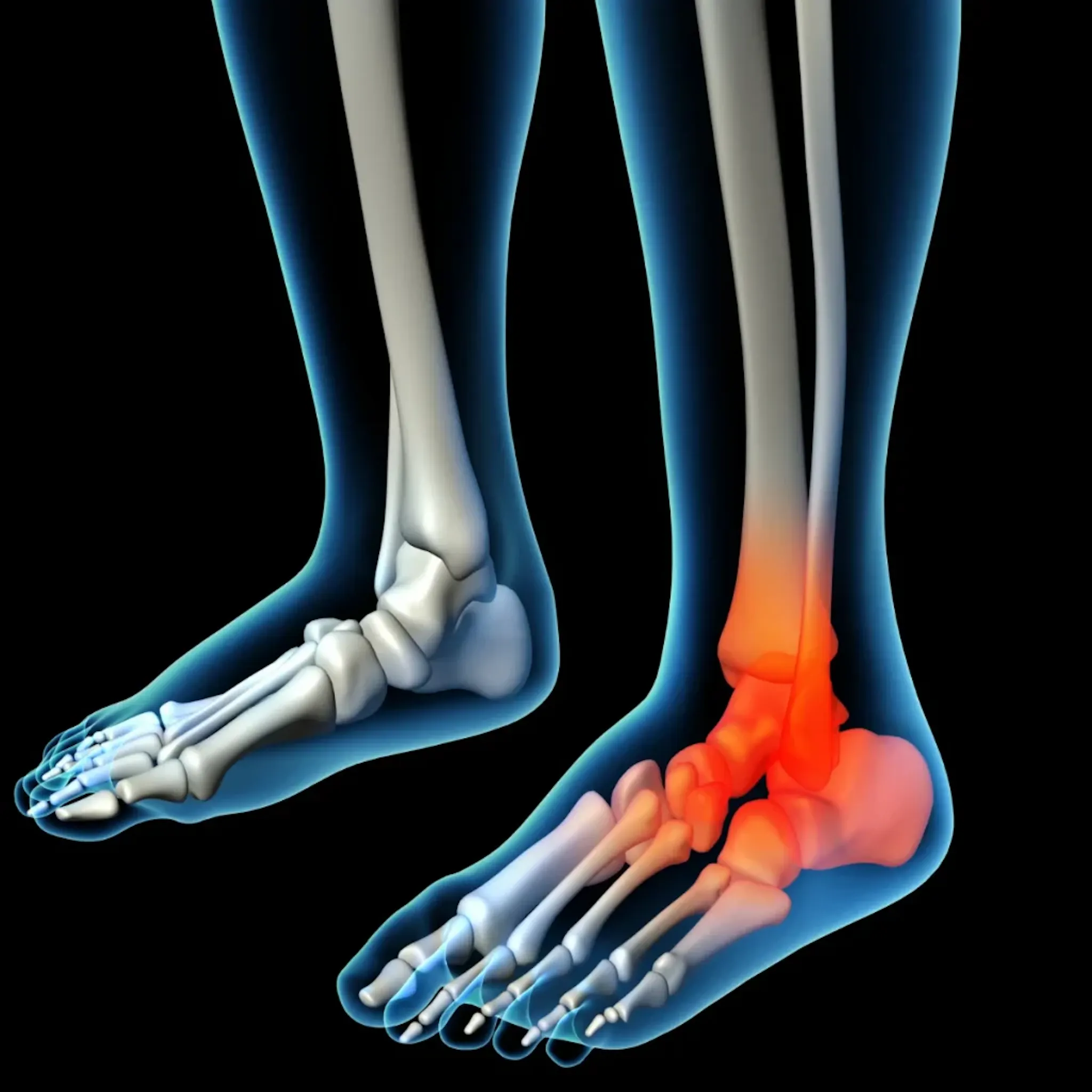
The interdigital nerves pass beneath a ligament that connects the heads of the metatarsal bones. When the forefoot is squeezed or loaded repeatedly, the nerve can be pinched against this ligament with every step. Over time, the irritated nerve responds by forming scar-like tissue around itself, a process called perineural fibrosis, which makes the space even tighter and the pain more persistent.
Several factors are known to increase this pressure:
- Narrow, pointed, or high-heeled shoes push the toes together and shift body weight onto the ball of the foot.
- High-impact activities such as running, court sports, and dancing load the forefoot repeatedly.
- Foot shapes and deformities such as bunions, hammertoes, flat feet, or very high arches change how pressure spreads across the metatarsals.
- Previous injury or trauma to the forefoot can leave the nerve more vulnerable to compression.
The condition is diagnosed more often in women, which is commonly linked to footwear choices, although it affects active adults of every gender.
Recognizing Morton’s Neuroma Symptoms
The most common Morton’s neuroma symptoms tend to build slowly and are often worse when wearing tight shoes or standing for long periods. Many people notice that taking off their shoe and rubbing the forefoot brings temporary relief.
Typical signs include:
- A sharp, burning, or stinging pain develops in the ball of the foot, often radiating into two neighboring toes.
- Tingling, numbness, or a pins-and-needles sensation appears in the affected toes.
- A feeling of standing on a small stone or a bunched-up sock persists even when nothing is in the shoe.
- Pain worsens with activity, narrow footwear, or high heels and eases with rest.
- Some people feel a click when the forefoot is squeezed, which clinicians call a Mulder’s click.
Because these symptoms can overlap with stress fractures, joint inflammation, tarsal tunnel syndrome, or nerve problems higher up the leg, a clinical examination is important. Ultrasound or MRI is often used to confirm the diagnosis and rule out other causes.
Conventional Morton’s Neuroma Treatments
Most people start with conservative care, and many improve without surgery. The goal is to reduce pressure on the nerve, calm inflammation, and change the mechanical forces that started the problem.
Footwear Changes, Padding, and Orthotics
Switching to shoes with a wide toe box, a low heel, and good cushioning is usually the first step. Metatarsal pads placed just behind the painful area can spread the metatarsal heads apart slightly and take load off the nerve. Custom or prefabricated orthotics may help when foot shape or gait patterns contribute to the compression.
Corticosteroid Injections
Steroid injections are one of the most studied options. A systematic review and meta-analysis of non-surgical interventions found that corticosteroid injections and manipulation or mobilisation had the strongest evidence for pain reduction, though the authors noted that high-quality evidence for a single gold standard treatment was still lacking (Matthews et al., Journal of Foot and Ankle Research, 2019).
A separate systematic review focused specifically on steroid injections reported that pain relief tended to peak between one week and three months, with symptoms often returning by around six months. A meaningful share of patients in the included studies eventually went on to surgery, and minor side effects such as skin depigmentation and fat pad thinning were reported (Choi et al., Clinics in Orthopedic Surgery, 2021). These findings suggest steroids can be helpful for short-term relief but may not address the underlying nerve irritation for everyone.
Other Procedures and Surgery
Clinicians may also offer alcohol sclerosing injections, radiofrequency ablation, or cryoneurolysis, which aim to quiet the nerve’s pain signals. Surgery, either removing the nerve segment or releasing the ligament above it, is generally reserved for persistent cases. Nerve removal can leave permanent numbness between the toes, and a stump neuroma can sometimes form, which is why many patients look for options that preserve the nerve first.
Where Stem Cell Therapy Fits
Regenerative medicine approaches Morton’s neuroma treatments from a different angle. Instead of numbing or removing the nerve, the aim is to support a healthier tissue environment around it, reduce chronic inflammation, and encourage the body’s own repair processes.
Mesenchymal stem cells (MSCs), including those derived from umbilical cord tissue, bone marrow, and adipose tissue, are of particular interest for nerve-related conditions. A systematic review of MSC research in peripheral nerve regeneration described how these cells release growth factors and signaling molecules that support Schwann cells, the cells responsible for maintaining and repairing nerve fibers. The authors highlighted adipose-derived MSCs as especially promising, while noting that most of the evidence still comes from preclinical studies and that clinical trials are at an early stage (Lavorato et al., International Journal of Molecular Sciences, 2021).
For a person with Morton’s neuroma, this means stem cell therapy is best viewed as an emerging, evidence-informed option rather than an established cure. It may be considered for people who have not responded well to footwear changes and injections, who want to avoid nerve removal, or who have related forefoot problems such as joint or soft tissue degeneration. Platelet-rich plasma (PRP) and exosome-based treatments are sometimes discussed alongside stem cells as complementary regenerative tools.
At Ways2Well, stem cell therapy is offered as part of a personalized plan that starts with a thorough evaluation, so the treatment approach matches the specific source of each patient’s pain.
Practical Steps to Protect Your Feet
Whatever treatment path someone chooses, daily habits play a major role in recovery and in preventing flare-ups. Reducing forefoot pressure gives any treatment a better chance of working.
- Wear shoes with a roomy toe box and limit time in high heels or tight athletic shoes.
- Use metatarsal pads or orthotics as recommended by a clinician.
- Alternate high-impact exercise with lower-impact options such as cycling or swimming during flare-ups.
- Stretch the calves and strengthen the small muscles of the foot to improve overall foot mechanics.
- Seek an evaluation early if numbness or burning pain lasts more than a few weeks.
Early attention matters because longer-standing nerve compression tends to involve more fibrous tissue, which can make the condition harder to manage conservatively.
Frequently Asked Questions
What does Morton’s neuroma feel like?
Most people describe a burning or sharp pain in the ball of the foot, often with tingling or numbness in two neighboring toes. Many also report the sensation of standing on a pebble or a folded sock.
Can this condition go away on its own?
Mild cases sometimes improve with footwear changes, padding, and activity adjustments. Symptoms that persist for weeks or keep returning usually need a clinical evaluation and a structured treatment plan.
How is the diagnosis confirmed?
A clinician typically starts with a physical exam of the forefoot and a review of symptoms. Ultrasound or MRI can confirm the thickened nerve tissue and rule out stress fractures or joint problems.
Are steroid injections a permanent fix?
Research suggests steroid injections often give meaningful short-term relief that peaks within the first few months. Symptoms return for many people, and some eventually consider other options.
Can stem cell therapy help with forefoot nerve pain?
Mesenchymal stem cells show promise for supporting nerve repair and calming inflammation, but most of the research is still preclinical. A personalized evaluation can help determine whether regenerative care is a reasonable option for a specific case.
When is surgery considered?
Surgery is usually considered when pain persists despite several months of conservative care. Because removing the nerve can cause lasting numbness, many patients explore nerve-preserving options first.
Key Takeaways
- The condition is a compressive nerve problem in the forefoot, not a true tumor.
- Tight footwear, high-impact activity, and foot deformities are common contributors.
- Corticosteroid injections have the strongest evidence for short-term pain relief, but symptoms often return.
- Stem cell therapy is an emerging, nerve-preserving option supported mostly by early-stage research.
- Early evaluation and lower forefoot pressure improve the chances of successful conservative care.
Schedule a Consultation
Persistent burning pain in the ball of the foot deserves a clear diagnosis and a plan built around your goals. Ways2Well takes a predictive, preventive, and proactive approach to musculoskeletal and nerve pain, including access to regenerative medicine for appropriate candidates. Schedule a consultation to discuss your symptoms and treatment options with a clinician.
For related reading, explore Ways2Well’s guides on stem cell injections for foot pain and tarsal tunnel syndrome treatment.
Sources
- The effectiveness of non-surgical interventions for common plantar digital compressive neuropathy (Morton’s neuroma): a systematic review and meta-analysis (Journal of Foot and Ankle Research, 2019)
- Corticosteroid Injection for Morton’s Interdigital Neuroma: A Systematic Review (Clinics in Orthopedic Surgery, 2021)
- Mesenchymal Stem Cell Treatment Perspectives in Peripheral Nerve Regeneration: Systematic Review (International Journal of Molecular Sciences, 2021)
Author: Ways2Well Editorial Team
Reviewed by: Scientific Advisory Board member