
Intersection syndrome is an overuse injury of the forearm that causes pain, swelling, and sometimes a creaking sensation a few inches above the back of the wrist, on the thumb side. It develops where two groups of tendons cross over one another, and repeated friction at that crossing point irritates the tendons and their protective sheaths. Rowers, paddlers, skiers, weightlifters, and people who do repetitive lifting or gripping at work are among those most likely to develop it.
Because the pain sits close to the wrist, it is often mistaken for other conditions, which can delay the right care. This article explains what the condition is, what causes it, how it is diagnosed, and how treatment typically progresses, from rest and splinting to regenerative options such as stem cell therapy for cases that do not settle.
What Is Intersection Syndrome?
The back of the forearm contains several tendon “compartments,” which are tunnels that keep groups of tendons organized as they travel toward the hand. The first compartment holds two tendons that move the thumb, while the second compartment holds two tendons that extend the wrist. A short distance above the wrist, the thumb tendons run diagonally across the top of the wrist extensor tendons, creating an intersection.
When the wrist is flexed and extended over and over, the tendons rub against each other at this crossing point. Over time, that friction can inflame the tendon sheaths, a process called tenosynovitis, and cause fluid to build up around the tendons. A review in the World Journal of Orthopedics describes the condition as a rare inflammatory overuse injury that results from friction between these two compartments and is seen mainly in athletes whose sport involves repetitive wrist extension (Balakatounis et al., World Journal of Orthopedics, 2017).
Common Causes and Risk Factors
Almost every case traces back to repetitive motion combined with load. Activities that require the wrist to bend backward and forward against resistance, especially many times in a row, place the most stress on the tendon crossing point.
The most common triggers include:
- Rowing and canoeing place the wrist through thousands of repeated extension cycles in a single session.
- Racket sports, skiing with pole planting, and weight training add gripping force to repetitive wrist motion.
- Manual work such as hammering, raking, shoveling, or assembly-line tasks repeats the same wrist movement for hours.
- A sudden jump in training volume, a new technique, or new equipment gives the tendons little time to adapt.
- Poor grip mechanics or weakness in the forearm muscles can increase friction at the intersection.
Symptoms to Watch For
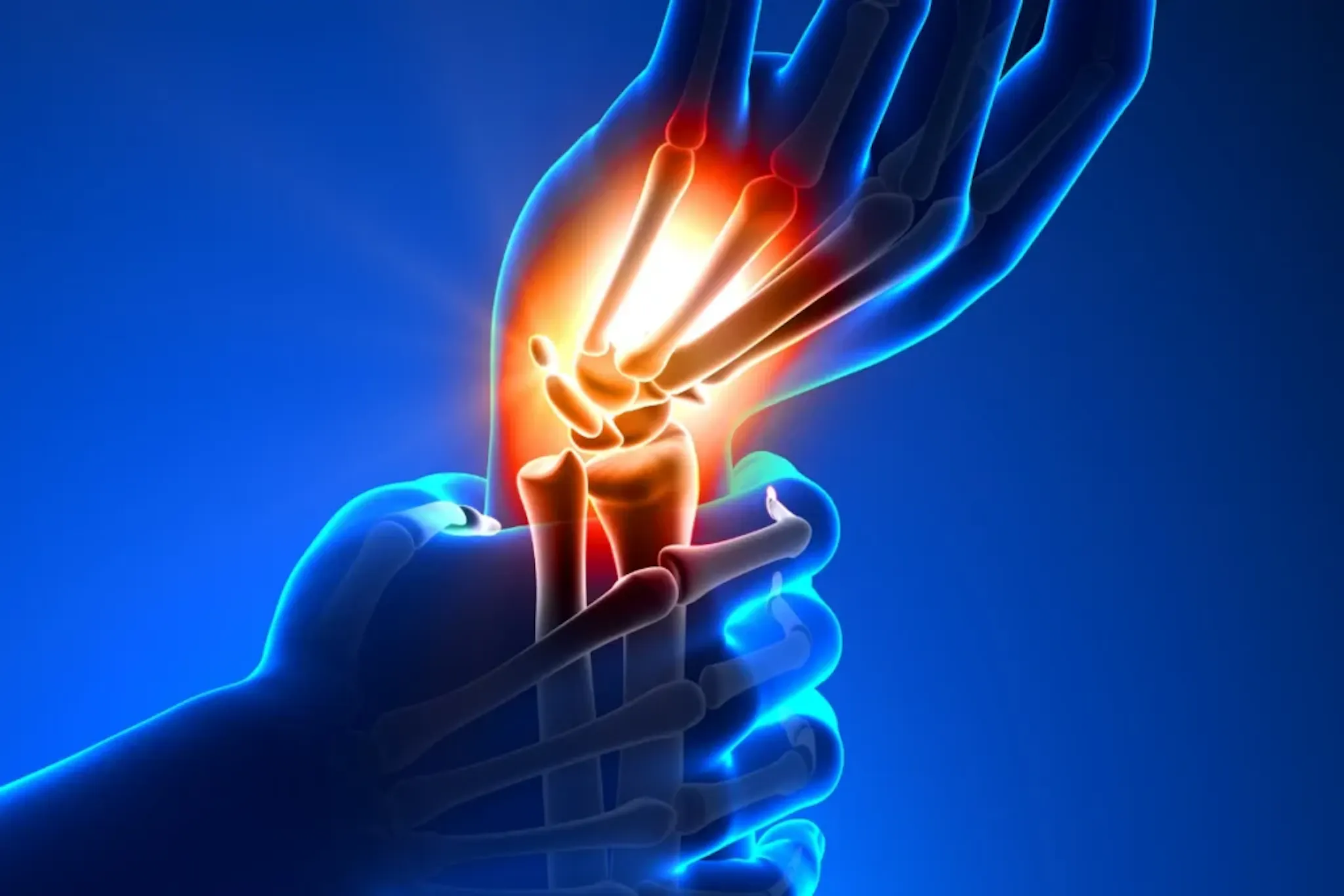
Intersection syndrome wrist symptoms usually appear on the back of the forearm, on the thumb side, roughly 4 to 8 centimeters above the bony bump at the end of the radius. This location is one of the main clues that separates it from conditions centered directly at the wrist.
People commonly notice:
- Aching or burning pain that worsens with wrist movement, gripping, or lifting.
- Visible or palpable swelling over the back of the lower forearm.
- A squeaking or creaking feeling, called crepitus, when the wrist moves.
- Tenderness when pressing on the area where the tendons cross.
- Reduced grip strength or a sense of weakness during repetitive tasks.
How It Is Diagnosed
Diagnosis usually begins with a careful history and a hands-on examination. A clinician will ask about recent changes in activity, press along the forearm to locate the tender spot, and move the wrist to check for pain and crepitus.
The most important distinction is from De Quervain’s tenosynovitis, which also affects the thumb tendons but causes pain lower down, right at the wrist near the base of the thumb. Intersection syndrome wrist pain sits higher on the forearm, which helps clinicians tell the two apart.
Imaging can confirm the diagnosis when the picture is unclear. In a small case series published in the Journal of Ultrasound, every patient showed fluid in the tendon sheaths and swelling around the tendons at the crossing point, and the authors concluded that ultrasound combined with the history and physical exam was enough to reach the correct diagnosis (Montechiarello et al., Journal of Ultrasound, 2010). MRI may also be used to show tendon sheath inflammation and surrounding edema, particularly when other causes need to be ruled out.
Intersection Syndrome Treatment Options
Most intersection syndrome treatment follows a step-by-step approach, starting with the least invasive options and escalating only if symptoms persist.
Conservative Care
First-line care focuses on calming the irritated tendons. This typically includes relative rest from the aggravating activity, ice, and a thumb spica splint that holds the wrist and thumb still for about two to three weeks. Anti-inflammatory medication may be used for short periods to ease pain. According to the World Journal of Orthopedics review, roughly 60% of cases resolve with conservative management alone.
Rehabilitation and Activity Modification
Once pain settles, a gradual program of stretching and forearm strengthening helps the tendons tolerate load again. Correcting technique, adjusting grip, and building training volume slowly reduce the chance of the problem coming back.
Injections and Surgery
When symptoms continue beyond the initial period, a corticosteroid injection near the tendon sheaths may be considered to reduce inflammation. For refractory cases that fail conservative care, surgical release and cleaning of the inflamed tendon sheaths is an option and has been reported to produce favorable outcomes. Surgery is generally reserved for a small group of persistent cases.
Can Stem Cell Therapy Help?
For people whose tendon pain lingers or keeps returning, regenerative medicine offers a different approach. Rather than only reducing inflammation, stem cell therapy aims to support the tissue environment so the tendons can repair more effectively. Tendons have a limited blood supply, which is one reason chronic tendon problems can be slow to heal.
Mesenchymal stem cells (MSCs) are the cell type most studied for tendon conditions. These cells can be sourced from adipose tissue (AD-MSC), bone marrow (BMAC), or umbilical cord tissue (HUC-MSC), and they are thought to work largely through signaling, releasing factors that modulate inflammation and support repair. A systematic review in Pharmaceutics examined clinical studies of adipose-derived MSCs in tendinopathy and reported pain relief and structural improvements on imaging, while noting that the evidence comes from a small number of studies with varied protocols (Itro et al., Pharmaceutics, 2022).
It is important to be clear about the evidence. Research on MSCs for tendon conditions is promising, but no published trials have focused specifically on this condition, and results vary between individuals. Stem cell therapy is best viewed as an option to discuss for chronic or recurrent tendon irritation after a proper diagnosis, often alongside rehabilitation. Platelet-rich plasma (PRP) and exosome-based approaches are sometimes discussed as complementary regenerative options.
At Ways2Well, regenerative care is part of a broader, personalized plan that considers activity demands, tissue health, and recovery goals. Learn more about our stem cell therapy program, or read about regenerative medicine for wrist healing and recovery.
Frequently Asked Questions
What is intersection syndrome?
It is an overuse condition in which two groups of forearm tendons rub against each other where they cross, a few inches above the wrist. The friction inflames the tendon sheaths and causes pain and swelling.
How is it different from De Quervain’s tenosynovitis?
Both involve the thumb tendons, but the pain is in different places. De Quervain’s pain sits at the wrist near the base of the thumb, while this condition causes pain higher up on the back of the forearm.
How long does recovery take?
Many cases improve within a few weeks of rest, splinting, and activity changes. Persistent or recurrent cases may take longer and may need additional treatment.
What does intersection syndrome treatment usually involve?
It usually starts with rest, ice, a thumb spica splint, and short-term anti-inflammatory medication, followed by stretching and strengthening. Injections or surgery are considered only if symptoms do not improve.
Can I keep training with this condition?
Continuing the activity that caused the problem often prolongs symptoms. Most people need a period of relative rest, then a gradual, technique-focused return to training.
Is stem cell therapy an option for chronic tendon pain in the forearm?
Stem cell therapy is being studied for chronic tendon conditions, and early clinical research is encouraging. It may be discussed for persistent cases after a full evaluation, although evidence specific to this condition is still limited.
Schedule a Consultation
Forearm pain that keeps coming back deserves a clear diagnosis and a plan built around how you actually use your hands and wrists. Ways2Well takes a predictive, preventive, and proactive approach to musculoskeletal health, combining careful evaluation with science-backed regenerative care when it is appropriate. Schedule a consultation to discuss your symptoms and explore whether stem cell therapy could be part of your recovery.
Sources
- Synthesis of evidence for the treatment of intersection syndrome (World Journal of Orthopedics, 2017)
- The intersection syndrome: Ultrasound findings and their diagnostic value (Journal of Ultrasound, 2010)
- Why Use Adipose-Derived Mesenchymal Stem Cells in Tendinopathic Patients: A Systematic Review (Pharmaceutics, 2022)
Author: Ways2Well Editorial Team
Reviewed by: Scientific Advisory Board member