
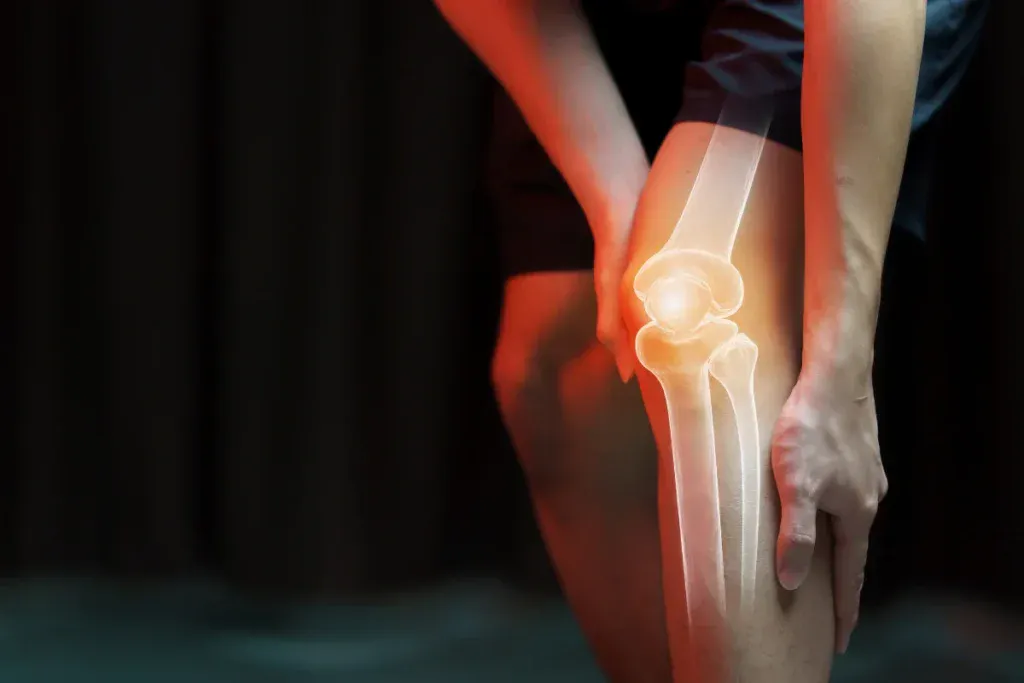
Knee popping and pain together are different from the occasional harmless click you might notice when standing up from a chair. When a pop, crack, or grinding sensation is paired with soreness, swelling, or a feeling of instability, it often signals that something inside the joint – cartilage, meniscus, or the kneecap’s tracking mechanism – is under mechanical stress. If you’ve caught yourself wondering why does my knee keep popping and hurting after a run, a long day on your feet, or simply climbing stairs, understanding the difference between benign noise and a symptom that warrants evaluation is the first step toward figuring out what’s actually going on.
This guide walks through the common causes of this symptom combination, how to tell when popping alone is likely harmless versus when it’s a sign to see a doctor, conventional treatment approaches, and how regenerative options like stem cell therapy are being explored as a complementary path for cartilage and joint degeneration.
Common Causes of Knee Popping and Pain
Knee popping and pain can stem from several different structures within or around the joint. The most frequently identified causes include:
Meniscus tears. The menisci are C-shaped cartilage pads that cushion and stabilize the knee. A tear – whether from a twisting injury or gradual degeneration – can create a popping, catching, or locking sensation, particularly with pivoting or squatting motions. Research indicates that these mechanical symptoms are common in people with meniscal tears, though they appear to be driven more by associated cartilage damage than by the meniscal tear itself (Tsai et al., Osteoarthritis Cartilage Open, 2025).
Patellofemoral pain syndrome (PFPS). PFPS involves pain around or behind the kneecap, often linked to how the patella tracks within its groove during movement. Contributing factors may include muscle imbalances, hip weakness, and repetitive loading, and a grinding or popping sound with stair climbing or prolonged sitting is a frequently reported feature (Waryasz & McDermott, Dynamic Medicine, 2008).
Cartilage wear and early osteoarthritis. As articular cartilage thins over time, the joint surfaces no longer glide as smoothly, which can produce crepitus – a grating or crackling sensation – along with soreness after activity or prolonged rest. For adults over 40 who notice this happening during ordinary activities like walking or standing from a chair, gradual cartilage change is often a leading explanation.
Iliotibial (IT) band issues. The IT band is a thick band of connective tissue running along the outer thigh to the knee. When it becomes tight or irritated, it can snap or pop over the femur’s bony prominence with each stride, producing lateral knee pain that’s often worse with running or descending stairs (Strauss et al., J Am Acad Orthop Surg, 2011).
Loose bodies. Fragments of bone or cartilage that break free and float within the joint space – sometimes from osteoarthritis, prior injury, or osteochondritis dissecans – can cause intermittent catching, popping, and even brief locking episodes as the fragment shifts position (van der Weiden et al., Am J Sports Med, 2024).
When Popping Is Benign vs. When to See a Doctor
Not all knee noise is a cause for concern. Physiological, or benign, popping is typically painless, occurs intermittently, and is thought to result from the formation and release of tiny gas bubbles within the joint’s synovial fluid, along with normal tendon or ligament movement over bony surfaces (Song et al., Clinics in Orthopedic Surgery, 2018).
So why does this combination happen rather than just popping on its own? The distinction usually comes down to accompanying symptoms. Pathological popping – the kind associated with an underlying condition – tends to occur consistently with movement and is paired with one or more of the following:
- Pain that persists during or after activity
- Visible or palpable swelling
- A sense of instability or the knee “giving way”
- Locking or an inability to fully straighten or bend the knee
- Popping that developed suddenly after an injury
If popping and pain occur together, especially with swelling, locking, or instability, it’s reasonable to schedule an evaluation with a healthcare provider. Imaging such as X-rays or MRI, combined with a physical exam, can help identify whether a meniscus tear, cartilage damage, or another structural issue is responsible.
Conventional Treatment Approaches
Treatment for the common causes of knee popping and pain depends heavily on the underlying issue, but most conservative care plans share a similar foundation:
Activity modification and rest. Reducing high-impact or deep-flexion activities (such as running, squatting, or stair climbing) can reduce joint irritation while allowing inflammation to settle.
Physical therapy. Targeted strengthening of the quadriceps, hip abductors, and gluteal muscles can improve patellar tracking and joint mechanics, which is a cornerstone of care for PFPS and many cases of cartilage-related pain (Waryasz & McDermott, Dynamic Medicine, 2008).
NSAIDs and supportive bracing. Over-the-counter anti-inflammatory medication and knee sleeves or bracing can help manage pain and swelling during the active phase of treatment.
Injections. Corticosteroid or hyaluronic acid injections are sometimes used for cartilage-related pain and early osteoarthritis to reduce inflammation and improve joint lubrication on a temporary basis. Our overview of non-surgical knee cartilage injury treatment options covers this stage of care in more depth.
Surgical evaluation. Meniscus tears with mechanical locking, unstable loose bodies, or advanced cartilage damage that doesn’t respond to conservative care may require arthroscopic intervention, such as partial meniscectomy, meniscal repair, or removal of loose fragments.
For many people, this conventional pathway resolves symptoms. For others – particularly those with early cartilage degeneration or persistent joint discomfort despite standard care – additional supportive options are increasingly being explored.
How Stem Cell and Regenerative Therapy May Help
Stem cell therapy has drawn growing interest as a complementary option for joint and cartilage support, particularly for people whose knee popping and pain is tied to cartilage wear or early osteoarthritis rather than an acute mechanical tear. Mesenchymal stem cells (MSCs), typically sourced from bone marrow or adipose tissue, are not intended to replace physical therapy, bracing, or surgical care – instead, they’re positioned as an additional layer of support that may be considered alongside those established approaches.
MSCs are thought to work primarily through paracrine signaling rather than by directly regrowing cartilage tissue. They release growth factors and anti-inflammatory signals that may help modulate the joint’s inflammatory environment, potentially supporting the body’s own reparative processes within cartilage and surrounding tissue (Vega et al., Transplantation, 2015). This regenerative approach is often discussed as part of a science-backed, personalized wellness strategy for joint longevity, rather than short-term symptom relief alone.
It’s important to understand that stem cell therapy for joint conditions is considered an emerging option, not a substitute for evaluation and treatment by an orthopedic provider, and it is not an FDA-approved treatment for cartilage regeneration. For a broader look at nonsurgical strategies across the joint, see how to heal and repair your knee without surgery.
The Evidence: What Research Shows
A randomized controlled trial evaluating allogeneic bone marrow-derived MSCs for knee osteoarthritis found that participants receiving the stem cell injection showed improvements in pain and reported quality-of-life measures compared to a control group receiving hyaluronic acid, along with signals of improved cartilage quality on follow-up imaging (Vega et al., Transplantation, 2015).
A more recent systematic review and meta-analysis pooling eight randomized controlled trials of intra-articular MSC injections for knee osteoarthritis found statistically significant improvements in pain and functional scores at both 6 and 12 months compared with control groups, with no significant difference in adverse events between MSC and control arms (Cao et al., Stem Cell Research & Therapy, 2025).
On the diagnostic side, a narrative review of degenerative meniscal tears found that mechanical symptoms like popping, clicking, and catching were more strongly associated with underlying cartilage damage than with the meniscal tear itself, reinforcing why cartilage health – not just meniscal status – is central to understanding this symptom pattern (Tsai et al., Osteoarthritis Cartilage Open, 2025).
Separately, a clinical review of knee joint noise distinguished physiological crepitus from pathological crepitus tied to osteoarthritis, ligament or meniscal injury, and post-surgical changes, providing a useful framework for differentiating benign popping from noise that warrants further workup (Song et al., Clinics in Orthopedic Surgery, 2018).
Taken together, current evidence suggests that regenerative approaches may offer a supportive role for cartilage-related joint symptoms, while conventional orthopedic evaluation and treatment remain the well-established foundation of care.
Frequently Asked Questions
Is knee popping without pain something to worry about?
Generally, no. Painless, intermittent popping is usually considered physiological and is thought to be related to small gas bubbles in the joint fluid or normal tendon and ligament movement. It typically does not require treatment unless pain, swelling, or instability develops.
Why does my knee keep popping and hurting when I climb stairs?
Popping and pain that worsen with stair climbing are commonly associated with patellofemoral pain syndrome, where the kneecap’s tracking is affected by muscle imbalances or repetitive loading. Cartilage wear under the kneecap can produce a similar pattern.
Can a meniscus tear cause popping without swelling?
Yes, though swelling is common with meniscus tears, some degenerative tears develop gradually and may cause popping or catching with minimal or intermittent swelling, particularly if the surrounding cartilage is only mildly affected.
What does it mean if my knee pops and then locks?
Locking combined with popping often points to a mechanical block within the joint, such as an unstable meniscus fragment or a loose body. This combination generally warrants evaluation by a healthcare provider rather than at-home management alone.
How is the cause of these knee symptoms diagnosed?
A healthcare provider typically starts with a physical exam assessing joint stability, tenderness, and range of motion, followed by imaging such as X-rays to evaluate joint space and alignment, or MRI to assess cartilage, meniscus, and ligament structures in more detail.
Does this combination always mean arthritis?
Not necessarily. While cartilage wear and early osteoarthritis are among the common causes of this symptom pattern, other causes – including meniscus tears, patellofemoral pain syndrome, IT band irritation, and loose bodies – can produce very similar symptoms in people of any age.
Is stem cell therapy a replacement for physical therapy or surgery?
No. Stem cell therapy is explored as a complementary option that may support the joint’s healing environment, but it does not replace physical therapy, bracing, or surgical intervention when those are clinically indicated.
When should I stop exercising if my knee is popping and painful?
If popping is accompanied by sharp pain, swelling, locking, or a sense of instability, it’s reasonable to reduce high-impact activity and seek evaluation before continuing your usual exercise routine.
Key Takeaways
- Knee popping and pain together often point to a structural cause, such as a meniscus tear, patellofemoral pain syndrome, cartilage wear, IT band irritation, or a loose body
- Painless, intermittent popping is usually benign, while popping paired with swelling, instability, or locking generally warrants evaluation
- Conventional treatment includes activity modification, physical therapy, bracing, medication, injections, and surgery when mechanical issues are present
- Stem cell and regenerative therapy are being explored as complementary options for cartilage-related joint symptoms, alongside – not in place of – standard orthopedic care
- A qualified healthcare professional should evaluate persistent or worsening knee popping and pain before starting any treatment plan
To learn more about how stem cell therapy may complement cartilage and joint support, explore a stem cell therapy consultation, or schedule a consultation with our team to discuss whether a regenerative approach may fit your joint health goals.
References
- Tsai L, Matzkin E, Jones MH, Miller RE, Katz JN. “Potential Sources of Pain in Symptomatic Degenerative Meniscal Tear: A Narrative Review.” Osteoarthritis and Cartilage Open. 2025;7(3):100616. DOI: https://doi.org/10.1016/j.ocarto.2025.100616
- Waryasz GR, McDermott AY. “Patellofemoral Pain Syndrome (PFPS): A Systematic Review of Anatomy and Potential Risk Factors.” Dynamic Medicine. 2008;7:9. DOI: https://doi.org/10.1186/1476-5918-7-9
- Strauss EJ, Kim S, Calcei JG, Park D. “Iliotibial Band Syndrome: Evaluation and Management.” J Am Acad Orthop Surg. 2011;19(12):728–736. DOI: https://doi.org/10.5435/00124635-201112000-00003
- van der Weiden GS, van Cruchten S, van Egmond N, Mastbergen SC, Husen M, Saris DBF, Custers RJH. “Osteochondritis Dissecans of the Knee Associated With Mechanical Overload.” Am J Sports Med. 2024;52(1):155–163. DOI: https://doi.org/10.1177/03635465231211497
- Song SJ, Park CH, Liang H, Kim SJ. “Noise Around the Knee.” Clinics in Orthopedic Surgery. 2018;10(1):1–8. DOI: https://doi.org/10.4055/cios.2018.10.1.1
- Vega A, Martín-Ferrero MA, Del Canto F, Alberca M, García V, Munar A, Orozco L, Soler R, Fuertes JJ, Huguet M, Sánchez A, García-Sancho J. “Treatment of Knee Osteoarthritis With Allogeneic Bone Marrow Mesenchymal Stem Cells: A Randomized Controlled Trial.” Transplantation. 2015;99(8):1681–1690. DOI: https://doi.org/10.1097/TP.0000000000000678
- Cao M, Ou Z, Sheng R, Wang Q, Chen X, Zhang C, Dai G, Wang H, Li J, Zhang X, Gao Y, Shi L, Rui Y. “Efficacy and Safety of Mesenchymal Stem Cells in Knee Osteoarthritis: A Systematic Review and Meta-Analysis of Randomized Controlled Trials.” Stem Cell Research & Therapy. 2025;16(1):122. DOI: https://doi.org/10.1186/s13287-025-04252-2
Author: Ways2Well Editorial Team
Reviewed by: Scientific Advisory Board member