
Toe arthritis is more common than most people realize, and the big toe is by far the most frequently affected joint in the foot. For a small joint, it carries an enormous share of the body’s load with every step – and when arthritis develops there, even walking can become painful and limiting. Understanding these symptoms, what causes them, and what treatment options are available can help people make informed choices about care.
What Is Toe Arthritis?
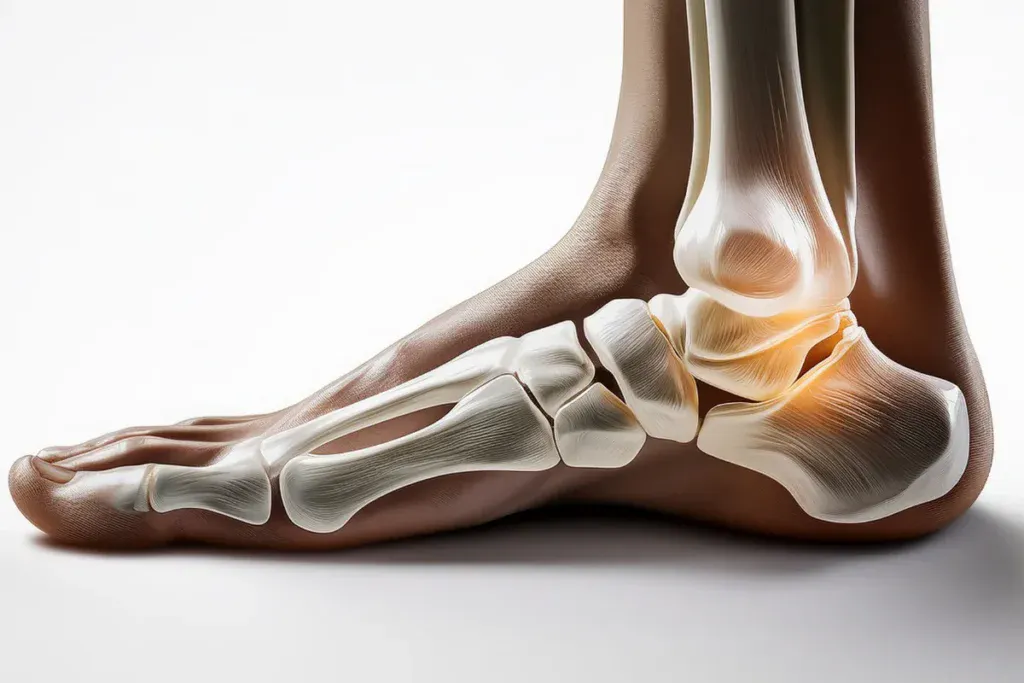
Toe arthritis most commonly refers to osteoarthritis of the first metatarsophalangeal (MTP) joint – the joint at the base of the big toe where the toe meets the foot. This joint is essential for the push-off phase of walking and any activity requiring foot flexion.
When arthritis develops here, the protective cartilage lining the joint gradually breaks down. As cartilage thins and deteriorates, the bones begin to rub against each other, triggering pain, inflammation, and eventual bone spur formation. This condition is sometimes called hallux rigidus when stiffness is the dominant feature, or hallux limitus in earlier stages when range of motion is reduced but not completely lost.
A separate but related condition, hallux valgus (bunion), involves a deformity at the same joint – though the underlying mechanism differs from cartilage-based osteoarthritis.
Gout – a form of inflammatory arthritis caused by uric acid crystal deposits – can also affect the big toe joint and is worth distinguishing because it has different management.
Arthritis in Big Toes Symptoms
Symptoms tend to develop gradually, though acute flares are possible.
Pain is the most consistent symptom – a deep aching at the base of the big toe that worsens with walking, running, or standing for extended periods. Pain that is more severe in the morning or after rest is characteristic of inflammatory arthritis patterns.
Stiffness in the big toe joint is a hallmark, particularly first thing in the morning or after sitting for a while. In hallux rigidus, the joint becomes progressively less able to bend upward (dorsiflexion), affecting the normal walking stride.
Swelling around the joint – particularly noticeable after activity or at the end of the day.
Bone spurs may develop on top of the joint, creating a visible bump and restricting range of motion further. These spurs can also rub on footwear, adding to discomfort.
Altered gait – people with significant arthritis at the big toe joint often begin to walk differently, placing more weight on the outer edge of the foot to avoid loading the painful joint. Over time, this compensation can create secondary pain in the knee, hip, or lower back.
What Causes Arthritis in the Big Toe?
Several factors contribute to the development of arthritis in the big toe joint:
Previous injury – a history of fractures, sprains, or repeated trauma to the MTP joint accelerates cartilage wear. Athletic activities that place high repetitive load on the forefoot (running, jumping, ballet) increase risk over time.
Structural factors – flat feet, a long first metatarsal bone, or an elevated first ray can alter how load is distributed across the big toe joint during movement.
Age-related degeneration – cartilage loses its ability to regenerate and repair with age, and the cumulative effect of decades of load takes its toll.
Gout – elevated uric acid levels deposit crystals in joints, triggering intense inflammatory episodes. Repeated gout attacks damage the joint cartilage over time.
Inflammatory arthritis – rheumatoid arthritis and psoriatic arthritis can also affect the MTP joint and produce a different symptom profile than osteoarthritis.
Treatment Arthritis Toe Joint: Conservative Options
Footwear modification is often the first step. Stiff-soled shoes with a wide toe box reduce the demand on the big toe joint during walking. Shoes with a slight rocker sole allow the foot to roll through the push-off phase without requiring the toe to flex as much.
Custom orthotics can provide a Morton’s extension – a rigid extension under the big toe that limits painful movement while supporting the foot’s normal arch.
Activity modification temporarily reduces high-impact or high-demand activities that provoke symptoms while maintaining overall fitness through lower-impact options.
Anti-inflammatory medications (NSAIDs) help manage pain and swelling during flares but do not slow the progression of cartilage loss.
Corticosteroid injections provide temporary relief of inflammation in the joint. They are typically used selectively, as repeated injections may contribute to cartilage breakdown over time.
Physical therapy can improve joint mobility, strengthen the intrinsic foot muscles, and address compensatory movement patterns.
Regenerative Approaches: Stem Cell Therapy for Toe Arthritis
For patients who have found conventional treatment insufficient – or who want to explore options before moving toward surgery – regenerative medicine offers an avenue worth considering.
Stem cell therapy using mesenchymal stem cells (MSCs) has been studied for osteoarthritis in various joints, including smaller joint applications. The hypothesis is that MSCs may reduce inflammation within the joint, support the health of remaining cartilage, and create conditions more favorable to tissue preservation. Research on stem cell therapy for small joint osteoarthritis, while less extensive than for larger joints like the knee or hip, is an active and growing area.
PRP (platelet-rich plasma) has also been used in joint arthritis settings to reduce inflammation and provide growth factors that may support tissue health. It is often combined with physical therapy and footwear management.
These approaches are generally appropriate for mild to moderate arthritis where some cartilage remains. For severe end-stage arthritis with significant structural loss, surgical options – including joint fusion (arthrodesis) or joint replacement – may be discussed.
Surgical Treatment for Toe Arthritis
When conservative and regenerative treatments do not provide adequate relief, surgery may be appropriate:
Cheilectomy – removal of bone spurs from the top of the joint. This relieves the impingement that limits dorsiflexion and is often effective in early to moderate hallux rigidus.
Arthrodesis (joint fusion) – fusing the bones of the MTP joint in a fixed position. This eliminates joint pain by removing the painful articulation. Most patients walk well after fusion, though the toe loses its ability to bend.
Joint replacement – less common for the MTP joint than for larger joints, but available in selected cases.
FAQ
Early signs often include mild stiffness and aching at the base of the big toe, particularly after exercise or first thing in the morning. Pain that eases after “warming up” is common in early-stage arthritis.
No, though both can cause big toe joint pain. Gout is caused by uric acid crystal deposits and typically presents with sudden, severe acute attacks of pain and redness. Osteoarthritis develops gradually from cartilage wear. The two conditions can coexist.
Footwear adjustments, ice after activity, anti-inflammatory medications, and reducing high-impact activities can help manage symptoms. Structured strengthening exercises for the foot and calf muscles, guided by a physical therapist, can also reduce joint load over time.
Stem cell therapy has been studied for joint arthritis and may help reduce inflammation and support cartilage health in the big toe joint. It is generally considered in moderate cases where conservative measures have been insufficient and sufficient cartilage remains. A full evaluation helps determine whether it is an appropriate option.
Not necessarily. Many people manage the condition well with footwear modification, orthotics, physical therapy, and targeted treatments. Surgery is typically considered when pain is severe and significantly affecting daily function despite comprehensive conservative care.
High-impact, prolonged walking – particularly in poor footwear – can aggravate symptoms during a flare. However, maintaining appropriate activity is generally better than complete rest. Low-impact movement and proper footwear support joint health long-term.
Key Takeaways
- Arthritis in the big toe most commonly affects the first MTP joint and ranges from mild stiffness to severe functional limitation
- Common symptoms include progressive pain, stiffness, swelling, and bone spur formation
- Causes include previous injury, structural factors, age-related degeneration, and inflammatory conditions like gout
- Treatment approaches range from footwear modification and orthotics to physical therapy, injections, and regenerative options
- Stem cell therapy and PRP are being studied as regenerative treatments that may support cartilage health and reduce joint inflammation
- Surgery (cheilectomy or fusion) is reserved for cases where conservative and regenerative approaches have not provided adequate relief
Conclusion
Toe arthritis is common, progressive, and manageable – particularly when addressed early with the right combination of footwear, rehabilitation, and when appropriate, regenerative care. Ways2Well offers stem cell therapy and a comprehensive approach to joint and musculoskeletal health. If your toe arthritis has been limiting your activity or not responding to conventional care, schedule a consultation to explore your options.
Sources
- Hallux Rigidus: Symptoms, Causes & Treatment – Cleveland Clinic
- Stiff Big Toe (Hallux Rigidus) – OrthoInfo AAOS
- Hallux Limitus: Symptoms, Causes & Treatment – Cleveland Clinic
- Gait Assessment and Orthotic Interventions in Hallux Rigidus – PMC/NIH
Author: Ways2Well Editorial Team
Reviewed by: Scientific Advisory Board member