
Testosterone and skin have a direct, well-established biological relationship. Androgens – primarily testosterone and its more potent derivative dihydrotestosterone (DHT) – regulate sebaceous gland activity, skin thickness, collagen content, and hydration. For people on testosterone replacement therapy (TRT), or for individuals with androgen imbalances, understanding this relationship helps set realistic expectations and supports proactive skin management.
This guide covers what the evidence shows about how testosterone affects skin health, from testosterone and oily skin to testosterone and skin elasticity – including what changes to expect on TRT and how to manage them.
How Testosterone Affects the Skin: The Biology
Skin is an androgen-responsive tissue. Sebaceous glands, hair follicles, and keratinocytes all express androgen receptors – making testosterone and its metabolites (primarily DHT) direct regulators of skin function.
Sebaceous glands and sebum production: Androgens are the primary stimulators of sebaceous gland growth and sebum output. DHT is the most potent driver of sebaceous activity – it binds androgen receptors in sebocytes with approximately 5 times the affinity of testosterone. Higher androgen levels → larger sebaceous glands → more sebum → oilier skin. This is why acne typically emerges at puberty (when androgens rise) and why anti-androgenic therapies are first-line treatments for hormonal acne.
Collagen and skin thickness: Testosterone supports collagen synthesis in the dermis. Men generally have thicker skin than women – a difference attributable in part to androgen-driven collagen density. Age-related testosterone decline is associated with declining dermal collagen, skin thinning, and reduced elasticity.
Skin hydration and barrier function: Testosterone influences sebum composition and skin surface lipids, which contribute to the skin’s barrier function and moisture retention.
Testosterone and Oily Skin: What to Expect on TRT
Increased sebum production – and the oilier skin that results – is one of the most consistently reported skin effects of testosterone therapy. Clinical data confirms this:
- TRT participants have been documented to experience approximately a 40% increase in sebum production alongside measurable improvements in skin hydration and elasticity
- A scoping review of dermatological adverse effects of TRT found that acne is the most frequent reported dermatological side effect, affecting between 0.6% and 9.1% of TRT participants across formulations (SMR, 2025)
- Topical formulations tend to produce higher local skin exposure – acne incidence may be lower with injectable or oral formulations in some studies
Why it varies: Individual response to androgen-driven sebum production depends on 5α-reductase activity (which determines local DHT production in the skin), genetic variation in sebaceous gland androgen sensitivity, and baseline skin type. Oily skin and acne are more common in men with higher baseline 5α-reductase activity.
For most individuals, testosterone and oily skin changes are manageable with appropriate skincare – gentle non-comedogenic cleansers, topical retinoids if needed, and in cases of moderate-to-severe acne, clinician-guided topical or systemic treatment.
How TRT Improves Skin Elasticity: The Benefits
While TRT is often discussed in terms of its skin side effects, the evidence also documents meaningful benefits for skin structure.
A clinical study of TRT participants found that at the 6-month mark:
- Skin hydration increased by approximately 25%
- Skin elasticity improved by 30% vs. baseline
These effects are consistent with testosterone’s role in supporting dermal collagen and skin thickness. As testosterone declines with age (typically losing 1–2% per year after age 30), skin becomes progressively thinner, drier, and less elastic. Maintaining physiological testosterone levels – either through lifestyle optimization or TRT when clinically indicated – may help preserve skin structural integrity as part of a broader anti-aging approach.
Important context: These skin benefits exist alongside the sebum-related side effects. TRT for skin improvement alone is not a clinical indication – the benefit-risk assessment needs to consider the full hormonal and medical picture.
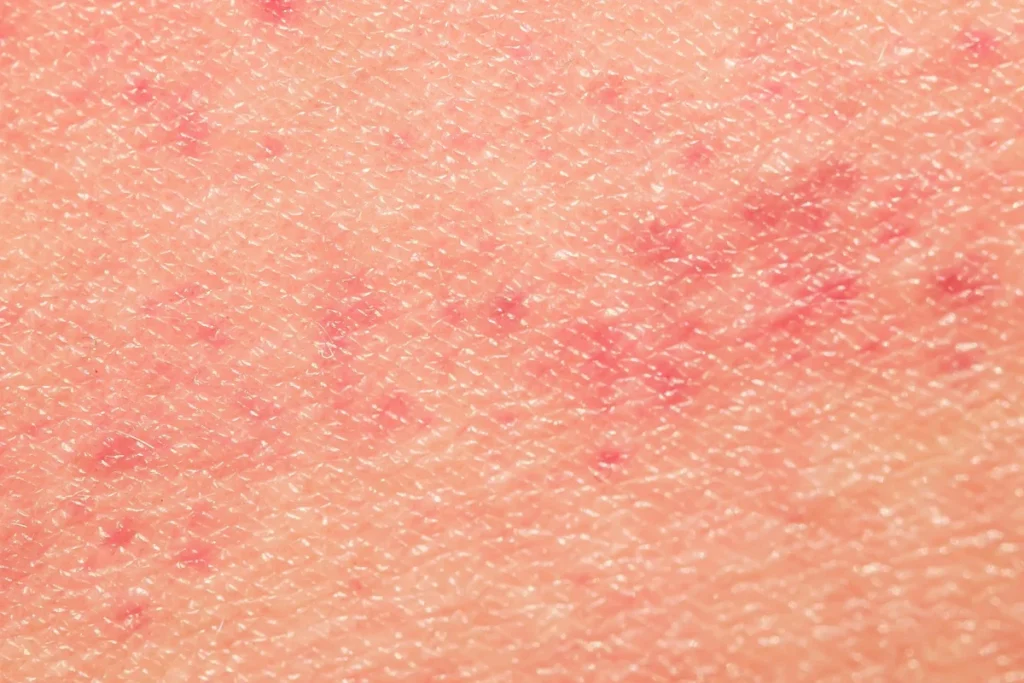
Acne on TRT: Why It Happens and What Helps
Testosterone-related acne follows the same pathophysiology as other hormonal acne: elevated androgen signaling → increased sebum → sebaceous duct occlusion → Cutibacterium acnes proliferation → inflammatory lesion formation.
Key points for TRT patients:
Location: Testosterone-related acne tends to appear on the back, chest, and shoulders – the body’s highest density sebaceous gland regions. This is distinct from the facial-only pattern common in adolescent acne.
Timing: Acne often peaks in the first few months of TRT as sebum production adjusts to the new hormonal environment, then may improve as the body adapts.
Management options:
- Topical retinoids (tretinoin or adapalene) – reduce follicular occlusion
- Topical benzoyl peroxide – reduces C. acnes burden
- Topical antibiotics – for inflammatory lesions
- Oral antibiotics (doxycycline) – for moderate-to-severe cases
- Oral isotretinoin – for severe, resistant cases under clinician supervision
- TRT formulation review – switching from topical to injectable may reduce local skin androgen exposure
What not to do: Stopping TRT unilaterally to manage acne without discussing it with your prescribing clinician – this may be unnecessary and could have broader health implications.
Androgens and Skin Health in Women
Women produce testosterone in smaller amounts, but androgen effects on skin health are relevant in female physiology too. Elevated androgens in conditions like polycystic ovary syndrome (PCOS) drive excess sebum production and hormonal acne in women. Conversely, androgen deficiency in postmenopausal women is associated with skin thinning and reduced collagen – which is part of why some women experience improved skin quality with low-dose testosterone supplementation as part of hormone optimization protocols.
Frequently Asked Questions
How does testosterone affect skin health?
The connection between androgens and skin is direct – through androgen receptors in sebaceous glands, hair follicles, and the dermis. Testosterone increases sebum production (causing oilier skin and potential acne), supports collagen synthesis (thicker, more elastic skin), and influences skin hydration and barrier function.
Why does testosterone cause oily skin?
Oily skin on TRT is driven by androgens – particularly DHT, the metabolite of testosterone – are the primary stimulators of sebaceous gland growth and sebum output. Higher androgen levels directly increase oil production in the skin. This is a consistent, well-documented effect of TRT.
Does testosterone improve skin elasticity?
Yes. Clinical studies have shown TRT-associated improvements in elasticity (+30%) and hydration (+25%) at 6 months. These benefits reflect testosterone’s role in supporting dermal collagen and skin thickness.
How common is acne on TRT?
Acne is the most frequently reported dermatological adverse effect of TRT, occurring in 0.6%–9.1% of patients depending on the formulation. It is more common with topical testosterone preparations and tends to appear on the back and chest. Management options include topical retinoids, benzoyl peroxide, and – for moderate-to-severe cases – clinician-guided systemic treatment.
Can testosterone affect skin in women?
Yes. Excess androgens in conditions like PCOS cause oily skin and hormonal acne in women. Androgen deficiency in postmenopausal women is associated with skin thinning and collagen loss. Low-dose androgen supplementation in hormone optimization protocols may support skin structure in women, though individual response varies.
Key Takeaways
- Testosterone and skin are directly linked through androgen receptors in sebaceous glands and the dermis in sebaceous glands and the dermis
- Oily skin and TRT: DHT is the primary driver of sebum production; TRT commonly causes a 40% increase in sebum output; acne affects 0.6%–9.1% of TRT users
- Skin elasticity on TRT: associated with +30% elasticity and +25% hydration improvements at 6 months – reflecting androgenic support of dermal collagen
- Acne management on TRT: Back and chest acne most common; topical retinoids, benzoyl peroxide, and clinician guidance resolve most cases without stopping TRT
- Skin health is one component of a broader TRT benefit-risk assessment – not an indication on its own
Want to Optimize Your Hormones and Skin Health?
If you have questions about how androgens affect your skin – or want a personalized assessment of your hormone levels and skin changes on TRT – schedule a consultation with Ways2Well. Explore hormone optimization and skin rejuvenation treatments at Ways2Well.
References
- “The cutaneous effects of androgens and androgen-mediated sebum production and their pathophysiologic and therapeutic importance in acne vulgaris.” Dermatology (2024). DOI: 10.1080/09546634.2023.2298878
- “Dermatological adverse effects of testosterone replacement therapy: a scoping review of the literature.” Sexual Medicine Reviews (2025). DOI: 10.1093/sxmrev/qeaf061
- “A Comprehensive Review: The Bidirectional Role of Sebum in Skin Health.” MDPI Bioengineering (2025). DOI: 10.3390/bioengineering12121333
- “Short- and long-term clinical skin effects of testosterone treatment in trans men.” PubMed (2014). PMID: 24344810PubMed link
- “Modulating testosterone pathway: a new strategy to tackle male skin aging?”PubMed (2012). PMID: 23049247 PubMed link
Author: Ways2Well Editorial Team
Reviewed by: Scientific Advisory Board member